epicArtLovers.com
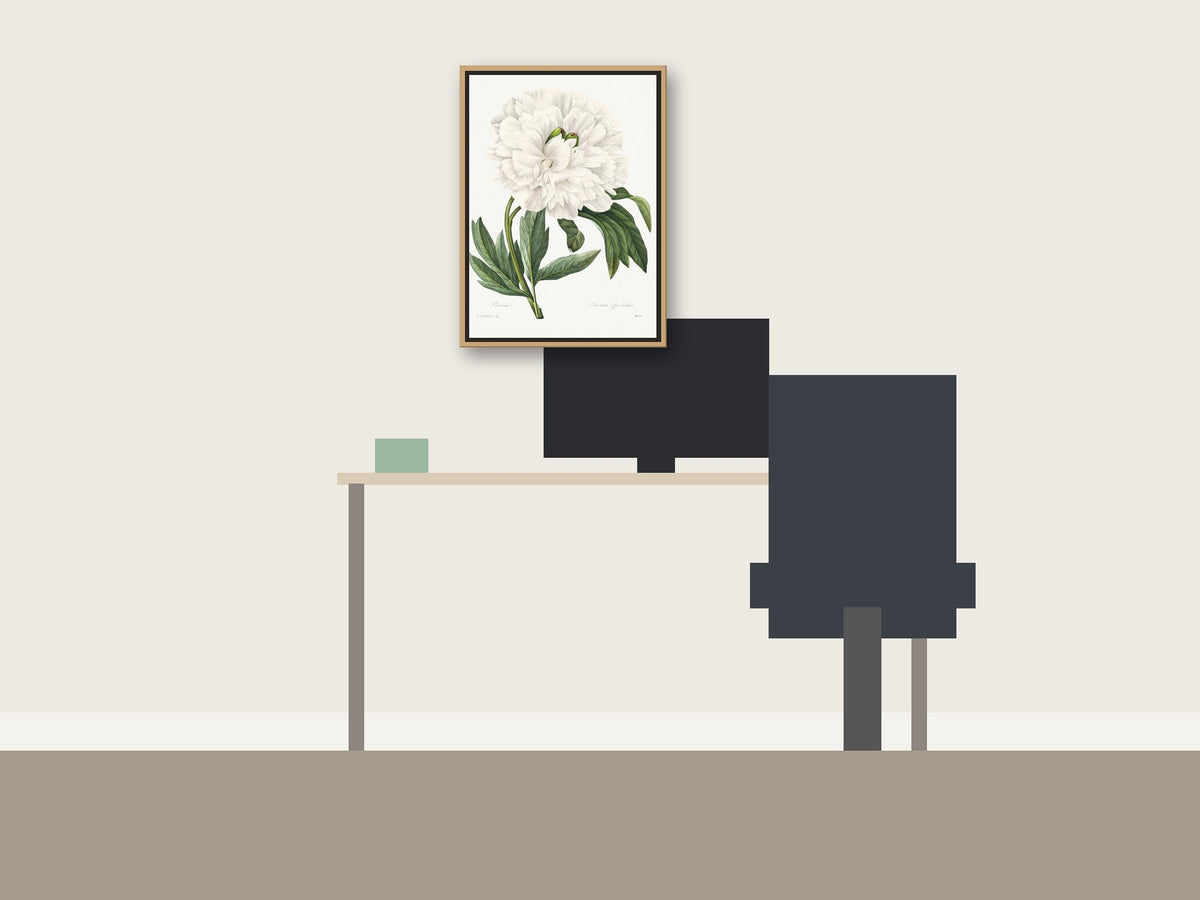
Choix des plus belles fleurs (1827) by Pierre-Joseph Redouté. Framed Canvas Print in a Natural Wood Floater Frame. Ready to Hang. Original Aspect Ratio
Choix des plus belles fleurs (1827) by Pierre-Joseph Redouté. Framed Canvas Print in a Natural Wood Floater Frame. Ready to Hang. Original Aspect Ratio
Verfügbarkeit für Abholungen konnte nicht geladen werden
Pierre-Joseph Redouté's "Choix des plus belles fleurs" (1827) is a masterful collection that exemplifies the zenith of botanical art. Known as the "Raphael of Flowers," Redouté's work transcends mere illustration, capturing the delicate beauty and intricate details of flora with scientific precision and artistic grace. Born in 1759 in the Southern Netherlands, Redouté navigated the tumultuous times of the French Revolution and the Napoleonic era, finding patronage in the French court, notably under Marie Antoinette and later Joséphine de Beauharnais, Napoleon's first wife.
Redouté's style in this piece is characterized by his meticulous attention to detail and his ability to blend scientific accuracy with aesthetic elegance. His philosophical approach was rooted in the Enlightenment ideals of observation and documentation, aiming to convey the inherent beauty and diversity of nature. "Choix des plus belles fleurs" is a celebration of nature's bounty, showcasing a variety of flowers in exquisite detail, each plate a testament to his skill with watercolor and stipple engraving techniques.
The significance of this work lies in its contribution to both art and science, bridging the gap between the two. It remains a vital reference for botanists and artists alike. The original plates are held in various collections, with some housed at the Hunt Institute for Botanical Documentation in Pittsburgh, reflecting its enduring legacy in the art world.
Printed to order on canvas and set in a natural wood floater frame. Ready to hang.
Share