epicArtLovers.com
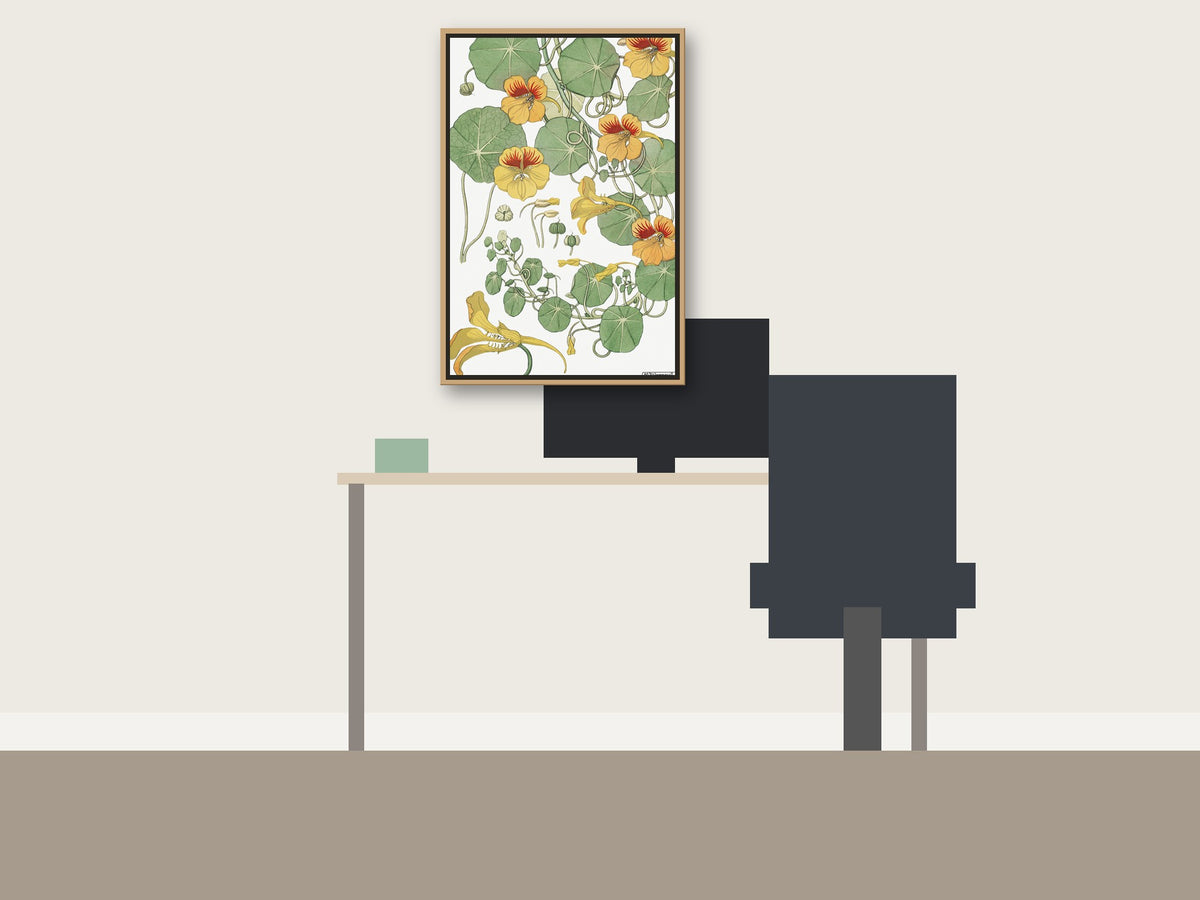
Capucine (nasturtium) from La Plante et ses Applications ornementales (1896) by Maurice Pillard Verneuil. Framed Canvas Print in a Natural Wood Floater Frame. Ready to Hang. Original Aspect Ratio
Capucine (nasturtium) from La Plante et ses Applications ornementales (1896) by Maurice Pillard Verneuil. Framed Canvas Print in a Natural Wood Floater Frame. Ready to Hang. Original Aspect Ratio
受取状況を読み込めませんでした
Maurice Pillard Verneuil's "Capucine (Nasturtium)" from the seminal work *La Plante et ses Applications Ornementales* (1896) is a quintessential example of the Art Nouveau movement's celebration of natural forms. Verneuil, a French decorative artist and designer, was instrumental in the flourishing of Art Nouveau, a style characterized by its organic lines and intricate details inspired by the natural world.
Born in 1869, Verneuil was deeply influenced by the burgeoning industrial age and the simultaneous desire to reconnect with nature. He studied under the renowned Swiss artist Eugène Grasset, which honed his skills in decorative arts and instilled a love for botanical motifs. Verneuil's work is marked by a philosophical approach that sought to bridge the gap between art and nature, using the latter as an endless source of inspiration.
In "Capucine," Verneuil employs lithography to capture the delicate beauty of the nasturtium. The piece exemplifies his mastery of line and color, employing flowing, sinuous lines and a harmonious palette to convey the elegance and vitality of the plant. This work is significant for its role in popularizing Art Nouveau's aesthetic, influencing both contemporary and future design disciplines.
Currently, the original piece is housed in various collections, with reproductions widely accessible, underscoring its enduring impact and the timeless appeal of Verneuil's vision.
Printed to order on canvas and set in a natural wood floater frame. Ready to hang.
Share